
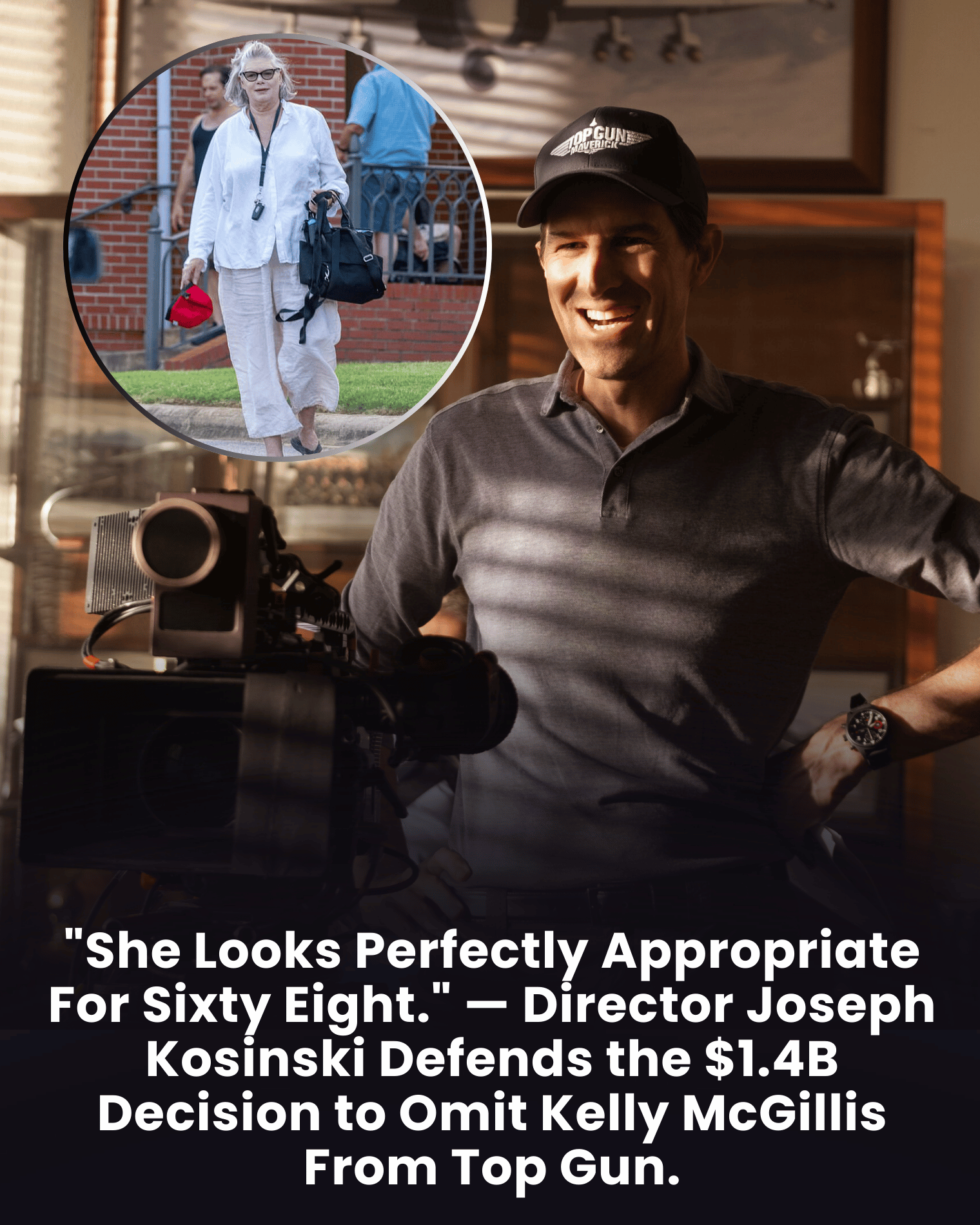
Joseph Kosinski's explanation for why Kelly McGillis did not return in Top Gun: Maverick speaks less to personal rejection and more to the creative direction behind one of the biggest legacy sequels in modern Hollywood. When questions surfaced about the absence of McGillis, the original film's leading lady, Kosinski framed the decision as part of a larger storytelling philosophy: the sequel was never meant to be a nostalgic reunion built entirely on the past. Instead, it was designed to propel the franchise forward with new emotional stakes, new relationships, and a new generation of characters.
That perspective became central to the film's identity. Top Gun: Maverick was not structured as a retrospective tribute to every familiar face from the 1986 original. It was, above all, a story about Pete "Maverick" Mitchell confronting age, legacy, and relevance in a world that is rapidly changing around him. Bringing back certain characters served that arc, but the film's emotional engine depended on balancing memory with reinvention. In that context, Kosinski appears to have made a deliberate choice to avoid letting the sequel become overly dependent on recreating old dynamics.
Kelly McGillis herself has long projected a sense of peace with stepping away from the conventional expectations of Hollywood. She has spoken openly about aging naturally, embracing her appearance, and rejecting the pressure to chase a younger image for the camera. That honesty has made her stand out in an industry often obsessed with preserving illusion. Rather than presenting herself as someone competing for renewed blockbuster relevance, McGillis has seemed comfortable living outside the machinery of fame, far from the punishing scrutiny that follows high-profile studio films.
Kosinski's defense of the decision can therefore be read as less an insult than an acknowledgment of two separate realities. On one side was a sequel built to function in the modern blockbuster marketplace, where pacing, chemistry, and franchise expansion often dictate casting choices. On the other was an actress who had already made clear that she was no longer interested in conforming to Hollywood's narrow standards or returning simply to satisfy audience nostalgia. The result was a creative separation that, while disappointing to some longtime fans, aligned with both the film's ambitions and McGillis's personal trajectory.
That does not mean the reaction was free of controversy. For many viewers, the absence of McGillis symbolized the harsh imbalance in how legacy sequels treat aging male and female stars. Tom Cruise was able to return as an older, still-commanding action icon, while McGillis was left outside the frame. That contrast inevitably fueled debate about gender, age, and visibility in franchise storytelling. Even so, Kosinski's comments suggest he wanted Top Gun: Maverick to focus on where Maverick was headed, not only on who he once was.
In the end, the sequel's enormous box-office success—nearly $1.5 billion worldwide—proved that the strategy worked commercially. Yet the conversation around McGillis endures because it touches a nerve deeper than one casting decision. It asks whether Hollywood can truly honor its past without erasing the women who helped build it in the first place.